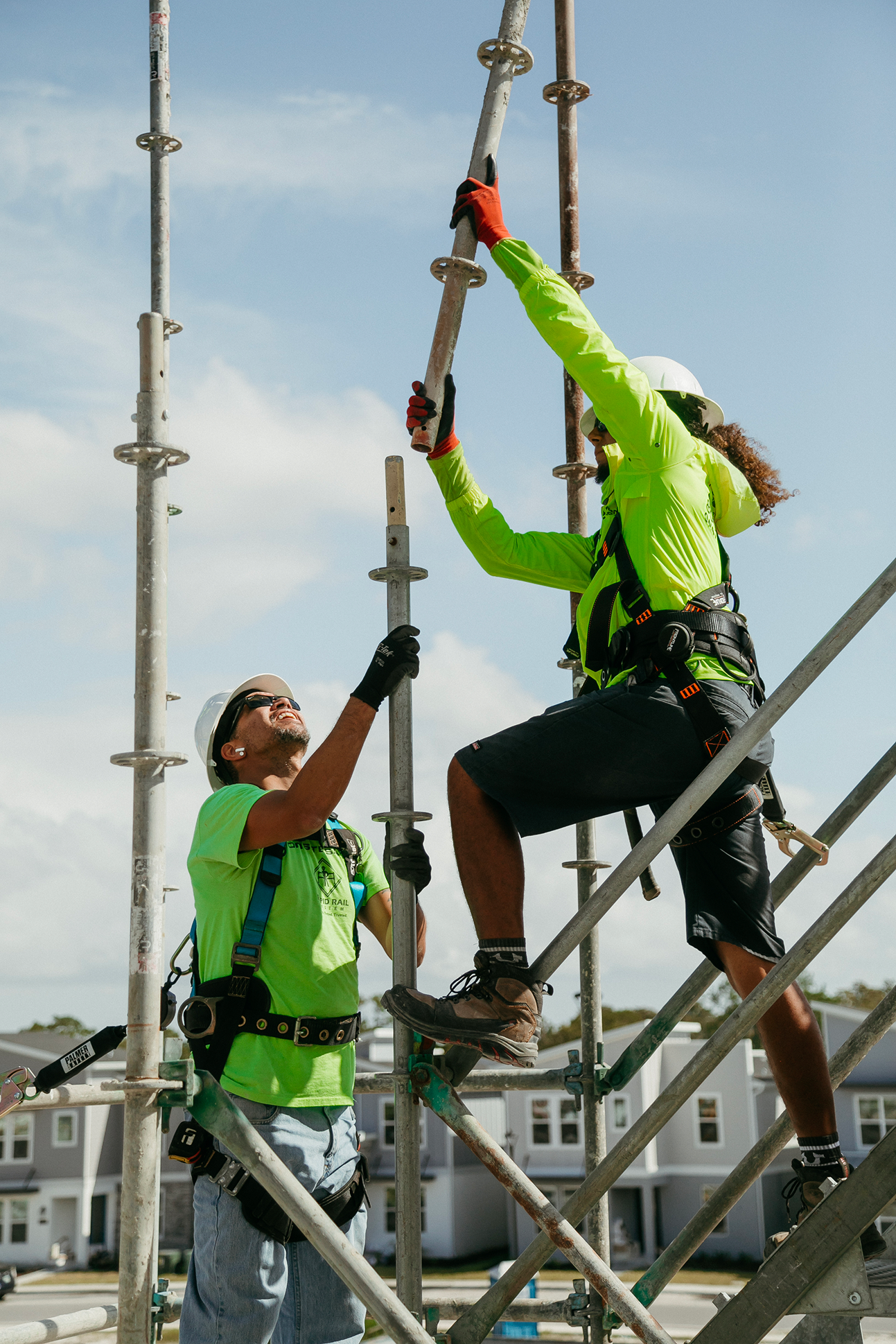


Scaffold Safety: Roles, Training, and Responsibility

Scaffolds are one of the most common pieces of temporary access equipment on jobsites—and one of the most misunderstood.


  • They’re also one of the most cited.

Why Scaffold Safety Matters

Scaffold-related incidents continue to be a major contributor to jobsite injuries and fatalities:


  • 29,000 scaffold fall injuries occur annually
  • 9% of construction-related deaths involve scaffolds
  • Scaffold violations consistently rank in OSHA’s top 10 citations


These aren’t edge cases. According to the Bureau of Labor Statistics, 65% of construction workers regularly work on scaffolds, which means scaffold safety isn’t a specialty issue—it’s a baseline requirement.


Most scaffold incidents don’t happen because the equipment “failed.” They happen because roles weren’t clear, training wasn’t consistent, or inspections were skipped.

What a Scaffold Is—and Why That Definition Matters

A scaffold is an elevated, temporary work platform used to support employees and materials during construction, maintenance, or repair activities.


That word temporary is where many problems begin.


Because scaffolds are not permanent structures, they’re often treated casually—modified in the field, overloaded, or used by workers who were never trained to be on them. OSHA addresses this directly by defining who is allowed to do whaton a scaffolded worksite.

The Four Categories of Scaffold Personnel

The safest scaffold systems are the ones treated as designed structures, not temporary conveniences. Clear ownership, documented inspections, and disciplined use are what keep them standing—and keep workers safe.


1. Competent Person

2. Trained Erector / Dismantler

3. Trained Scaffold Worker

4. Prohibited (Non-Trained) Person


If you are not trained, knowledgeable, capable, and authorized, you should never use a scaffold on a jobsite—regardless of experience or job title.

OSHA Training Is Role-Specific—Not One-Size-Fits-All

OSHA requires specific training for each scaffold role. Training must address:


  • The type of scaffold being used
  • Associated hazards (falls, falling objects, collapse)
  • Proper use, load limits, and access
  • Procedures for handling unsafe conditions


Employers are also required to provide retraining if there is reason to believe an employee:


  • Lacks the understanding needed to work safely
  • Is not following proper scaffold procedures
  • Is exposed to new hazards or new scaffold systems


Training isn’t a one-time checkbox. It’s an ongoing responsibility.


You may also be interested in:

Construction workers wearing hard hats and safety vests walking on a construction site.
February 16, 2026
Essential construction safety equipment and gear every jobsite must have. From harnesses to hard hats—stay compliant and protect your crew.
Construction worker in safety harness at wooden framing site.
February 16, 2026
Fall arrest systems explained: anchor points, lifelines, and OSHA compliance. Essential guide for construction safety at height.

Blueprint with construction tools, including a level, hard hat, and compass.
February 16, 2026
Temporary vs permanent guardrail systems: choose the right fall protection for your construction project. Compare benefits, compliance, and application.